Acquisition project | Mokobara
Ever found yourself struggling with a heavy, uninspiring suitcase while trying to look sleek and put together at the airport? Say hello to Mokobara, the premium travel lifestyle brand turning every journey into a breeze!
Imagine moving through transit with luggage and backpacks that look effortlessly sharp and pack like an absolute dream. Mokobara combines minimalist aesthetics with genius functionality, featuring everything from ultra-silent glide wheels to hyper-organized, intuitive compartments.
For the modern professional, creator, and explorer who refuses to compromise on style or substance, this is the ultimate travel companion. It is time to start going places! 🧳✨

(Go and speak to different users of the product and the people in the chain: households buying the product, shopkeepers selling the product, churned users, and users using competitor's products. In the case of B2B products identify the decision makers, the influencer, the blocker, and the end-user)
Understanding the ICP
Mokobara's core customer is the millennial and Gen Z traveller, aged 18-45.
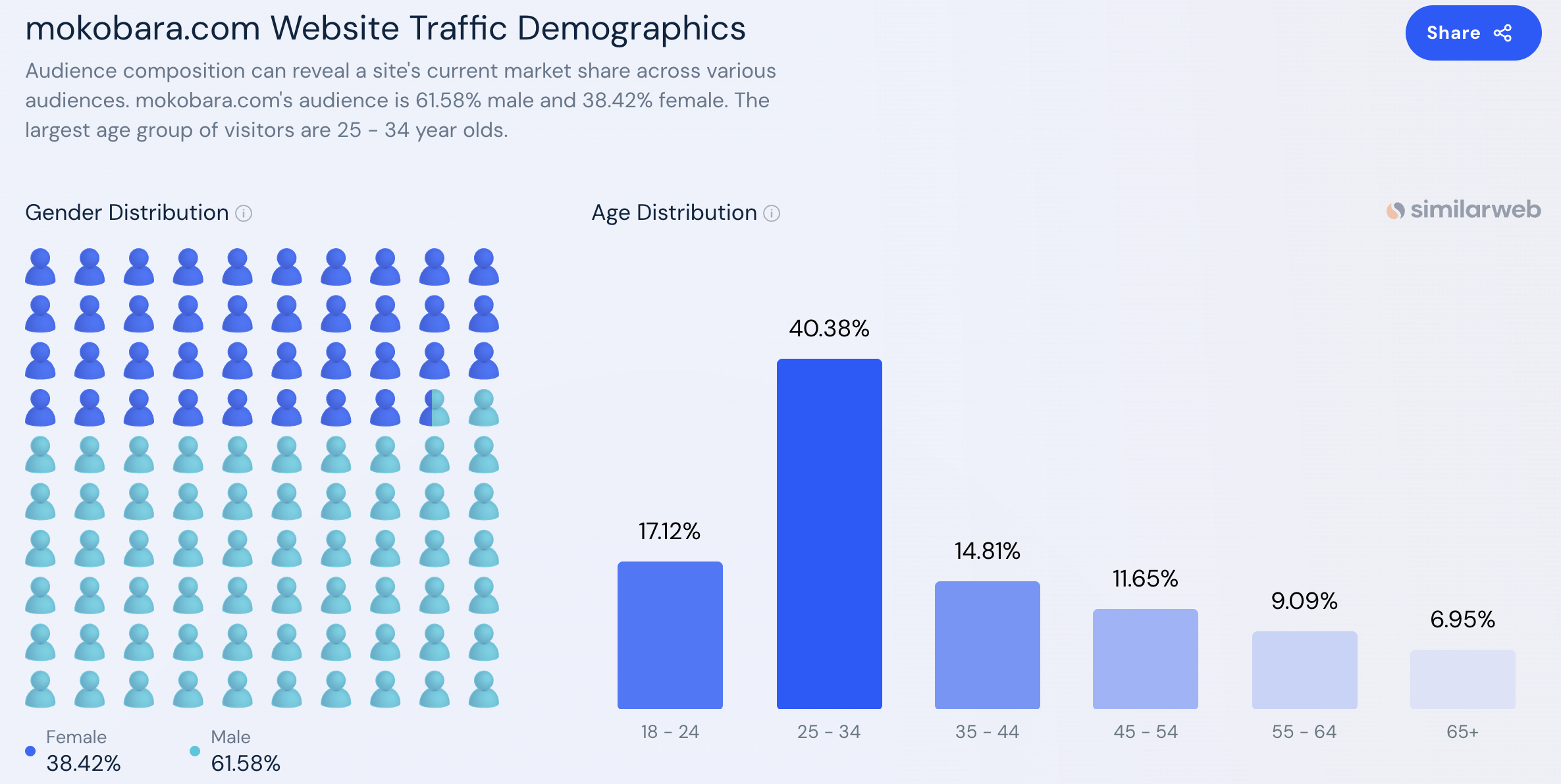
This is to understand the behaviour and characteristics of Mokobara's ideal customers, why they decide to buy and what they value most. By understanding this, we can define our acquisition strategies.
Criteria | ICP 1 | ICP 2 | ICP 3 |
Name | Anamika | Arnab | Ravindra |
Age | 32 | 27 | 43 |
Occupation | Corp Dev Manager | Businessman | Vice President |
Location | Bengaluru (Tier 1) | Raipur (Tier 2) | Mumbai (Tier 1) |
Marital status | Married | Single | Married |
Kids | No | No | Yes |
Income | 30 LPA - 45 LPA | 18 LPA - 24 LPA | 80 LPA+ |
Travel Frequency | Few times in a year | Multiple times in a year | Multiple times in a year |
Travel Type | Aspirational Millenial | Frequent Traveler | Frequent Traveler |
Office Going | Yes | No | Yes |
Purchase Trigger | Going abroad, Saw it on social media or with a friend, Existing Luggage Broke, Durability | Existing luggage broke, Durability | Durability, Going abroad, Ease of use, Colors, Gift |
Price Sensitivity for Bags | Medium | High | Low |
Functional Pain Point | Organization and Planning, Aesthetics, Mobility, Discovery | Mobility and Organization | Usability, Mobility, Efficiency |
Preferred Apps | Instagram, Twitter, LinkedIn, CRED, Groww | Instagram, Snapchat, Kite | LinkedIn, Twitter, Facebook |
Frequency of Mall Purchases | Occasionally | Often | Occasionally |
Cultural Tribe | Diljit Dosanjh, Tanya Khanijow, Apple India | Ratan Tata, Reliance, Apple India | Apple, Taj Hotels, Emirates |
Aware of Mokobara | Yes | No | Yes |
Current/Previous Brand | Safari | Not Aware (Doesn't Care) | Samsonite |
Leisure Spending Patterns | High-end dining, Travel, and Clothing | Travel, Dining, and Clothing | Luxurious Travel, Dining, Designer Clothes |
Feedback on Mokobara | Great looking but little costly | Very Costly | Quality Product |
Potential Repeat Customer | Yes | No | Maybe |
Prioritizing ICPs for Acquisition:
Criteria | ICP 1 (Anamika) | ICP 2 (Arnab) | ICP 3 (Ravindra) |
|---|---|---|---|
Adoption Rate | High | Low | Medium |
Appetite to Pay | Medium | Medium | High |
Frequency of Use Case | High | High | High |
Distribution Potential | High | Low | Medium |
Prioritizing ICP 1 on the basis of:
- Adoption Rate
- Frequency of Use Case
- Distribution Potential
What's in a Name?
Most luggage brands are named after their founders, their factories, or a vaguely European-sounding word designed to suggest quality. Mokobara took a different route.
The name is built from two cultures that have never sat in the same sentence before:
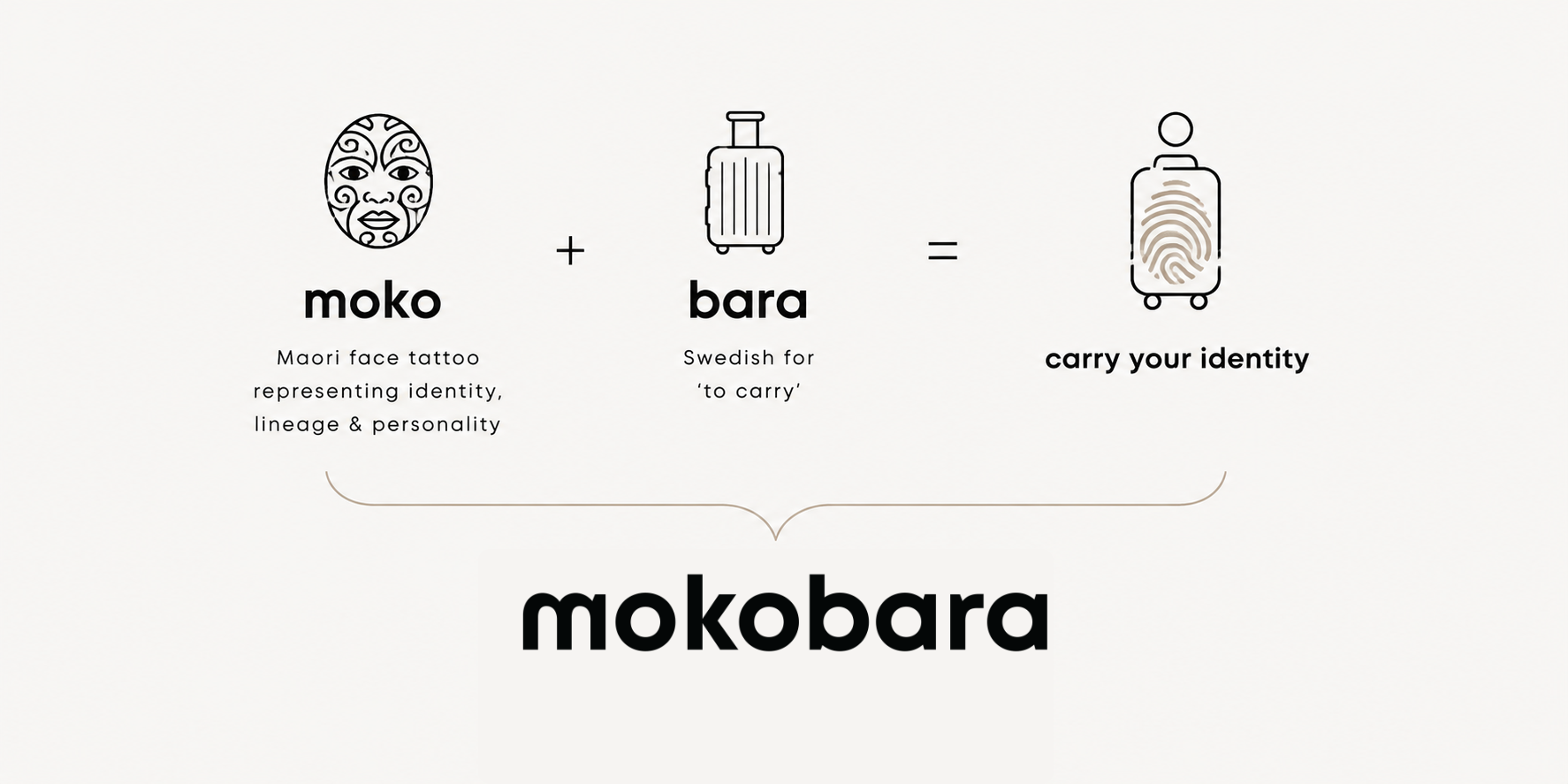
Moko comes from Tā moko, the traditional Māori facial tattoo. It isn't decorative. It's a carved record of who you are: your lineage, your identity, your story made visible.
Bara is the Swedish verb to carry.
Put them together and the name translates, loosely, to "carry your identity."
That's not a tagline retrofitted onto a brand. It's the brand's entire thesis in two words. The promise was simple: travel gear good enough to trust, and considered enough to carry with pride. The name was just the first commitment to both.
What Mokobara sells (Core Value Proposition)?
It is not just luggage.
It is the feeling of walking through a terminal and knowing that everything you're carrying was chosen with care. It is the quiet confidence of opening your bag in a hotel room and finding that nothing has shifted, nothing has scuffed, nothing has dated.
Mokobara is built for the Indian traveller for whom going somewhere is no longer an event but a lifestyle, who refuses to choose between style and substance, and who has, until now, had to compromise. Premium imported brands like Tumi and RIMOWA were aspirational but inaccessible. Legacy Indian brands had the price right but the aesthetics of a previous generation with quality that is not up to the mark.
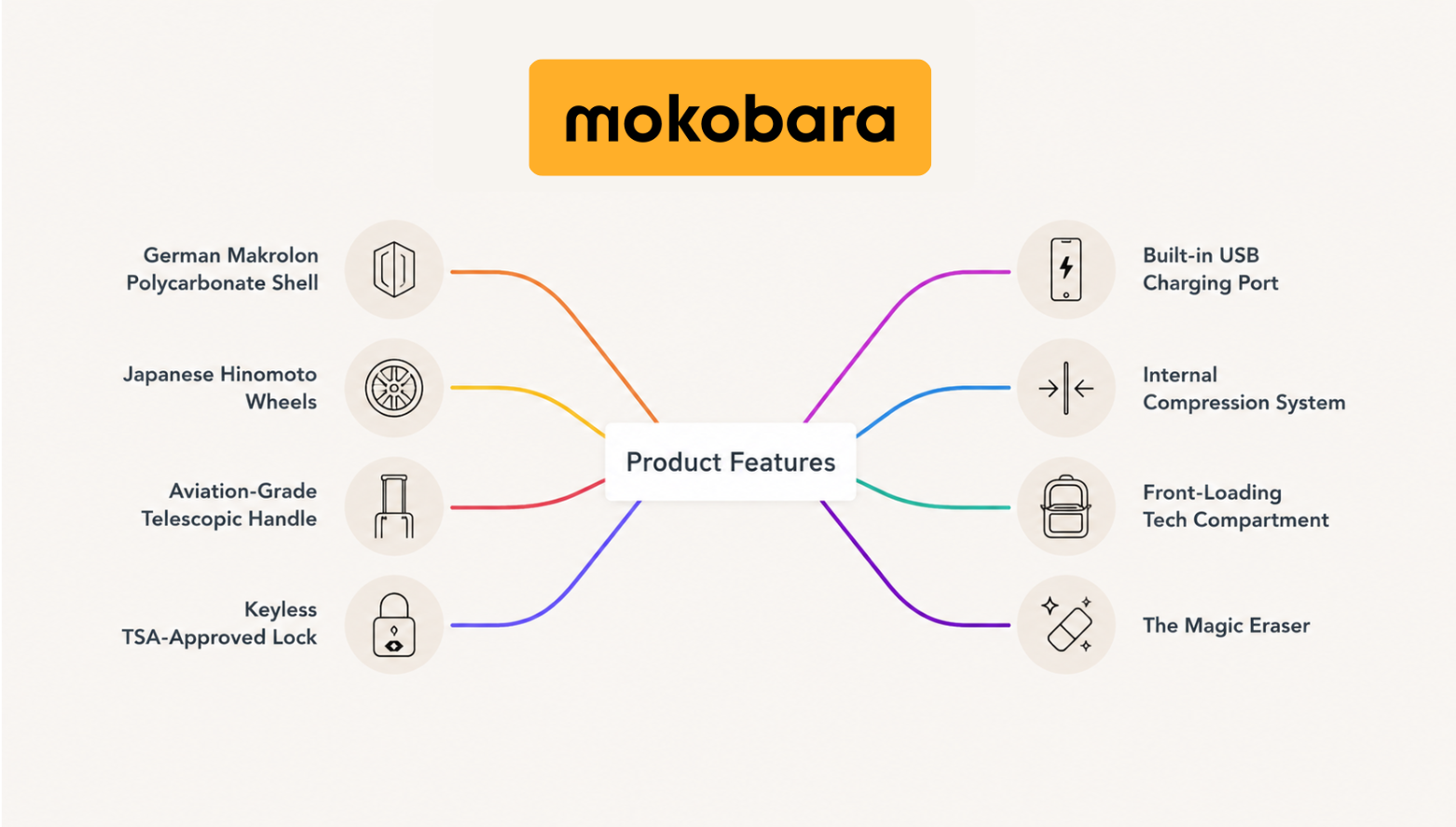
Mokobara was built to close that gap. Eighteen months of product development, multiple factory visits across China, Japanese Hinomoto wheels, polycarbonate shells engineered for impact, and a design partnership with Morrama in London went into the first carry-on before it ever reached a customer.
The promise that emerged is simple: travel gear that is as considered as the person carrying it.
The Philosophy - Lagom
There is a Swedish word that explains every design decision Mokobara has ever made: lagom. Not too much. Not too little. Just right.
Maximalism is easy. Minimalism is easy too. Lagom is neither. It is the discipline of asking, on every choice, is this exactly what's needed? And having the patience to stop there.
In a category that has historically picked one extreme or the other, mass-market luggage designed to disappear, or imported luxury designed to announce, Mokobara chose a third path. The bag should be noticed, but only by someone looking.
And lagom doesn't live only in the product. It runs through everything: stores that are unhurried, packaging that doesn't perform, a brand voice that never shouts. The promise of the product is matched by the restraint of everything around it.
That consistency is the brand.
Designing Acquisition Channel
(keep in mind the stage of your company before choosing your channels for acquisition.)
Channel Name | Cost | Flexibility | Effort | Lead Time | Scale |
|---|---|---|---|---|---|
Search (SEO) | Low | Medium | High | High | High |
Paid Ads: Meta, Google, YT | High | High | Medium | Low | High |
Influencer Marketing | High | High | High | Medium | High |
Marketplaces (Amazon, Flipkart) | Medium | High | Medium | Medium | Medium |
Quick Commerce | Medium | Medium | Medium | Low | Medium |
Own Retail (EBOs + Airport Stores) | High | Low | High | Low | High |
Owned Channels (WhatsApp, Email, CRM) | Low | High | Medium | Medium | Medium |
Referral Program | Medium | High | Low | Medium | Medium |
Product Integrations / Brand Collaborations | Medium | High | Medium | Low | High |
Content Loops | Low | Medium | Medium | High | High |
Deprioritising Organic Search & Marketplace Search
While search remains an important acquisition channel, it is not an area where Mokobara currently enjoys a significant advantage.
On Google, Mokobara ranked 5th for "suitcase" and 4th for "trolley bag", but visibility was inconsistent across other commercial luggage searches. New-age competitors such as Nasher Miles and Assembly frequently appeared more prominently.
Google's increasing emphasis on shopping results further reduces the value of traditional website rankings. For many commercial queries, Mokobara products appeared primarily through Amazon and Flipkart listings rather than through mokobara.com.
Marketplace visibility was also relatively weak. On Amazon, Mokobara ranked 22nd for "suitcase" and 38th for "trolley bag" organically, although sponsored listings consistently appeared among the top results.
Given the competitive nature of SEO and marketplace ranking improvements, the effort required is high and the payoff is likely to be gradual. As a result, the following opportunities present more attractive near-term acquisition levers.
- Referral Program
- Product Integrations
- Content Loops
Special Mention: Retail Stores
Luggage is bought by hand. Customers check the wheel action, feel the shell, judge the colour in daylight, lift the empty weight. No PDP substitutes for that, which is why offline remains the dominant channel for premium luggage.
Why stores matter beyond the sale
- -> Monos found a single store lifted regional ecommerce revenue by ~40%
- -> Mokobara's retail lead: a very large share of premium-price sales comes offline
- -> Someone who handles the product in a mall and buys online three weeks later reads as an online conversion, but the store made it happen
Location is positioning
Format | Signal | Note |
|---|---|---|
Premium malls | Accessible aspiration | Where Mokobara is today |
Affluent high-streets | Design credibility | Indiranagar, Bandra, CP |
Airports | Travel authority | 3-4x city-store productivity; rents ~₹2,500/sq ft/mo (DEL intl), ₹1,800-2,200 (BLR T2) |
International | Global brand, not domestic | Diaspora reach; UAE underway |
The near-term opportunity
300-500 sq ft airport stores at Delhi T3, Mumbai T2, Bengaluru T2. Carry-ons and accessories only, not check-in trolleys — passengers already carrying luggage won't buy a bag to check in, but will buy a cabin bag, sling, or tracker on impulse.
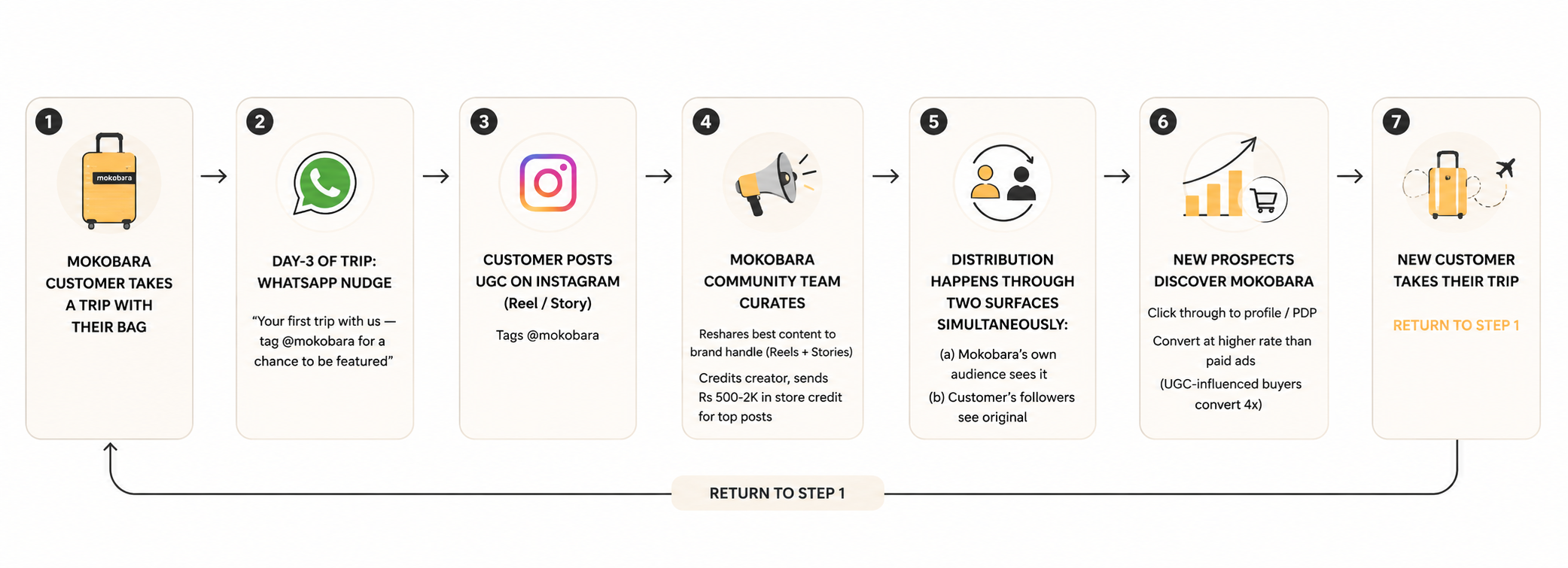
A content loop turns every customer's trip into a piece of marketing, and every piece of marketing into a new customer. Done right, it becomes a compounding acquisition engine that doesn't need paid distribution to grow. Done wrong, it's a hashtag no one uses.
The Mokobara opportunity is unusually strong here: the product is inherently photogenic, the category (travel) is one of Instagram's dominant content verticals, and the customer base skews toward people who already post their trips. The ingredient list is ready. The loop just hasn't been built.
Step 1: Nail down the content creator, distributor, and channel
Role | Who / What | Why they fit |
|---|---|---|
Content Creator | The Mokobara customer, on their trip. Not paid influencers, not brand-produced content, not stock photography. | Customers on trips are already producing travel content. They post whether or not Mokobara asks. The task is to redirect existing behaviour, not create new behaviour from scratch. |
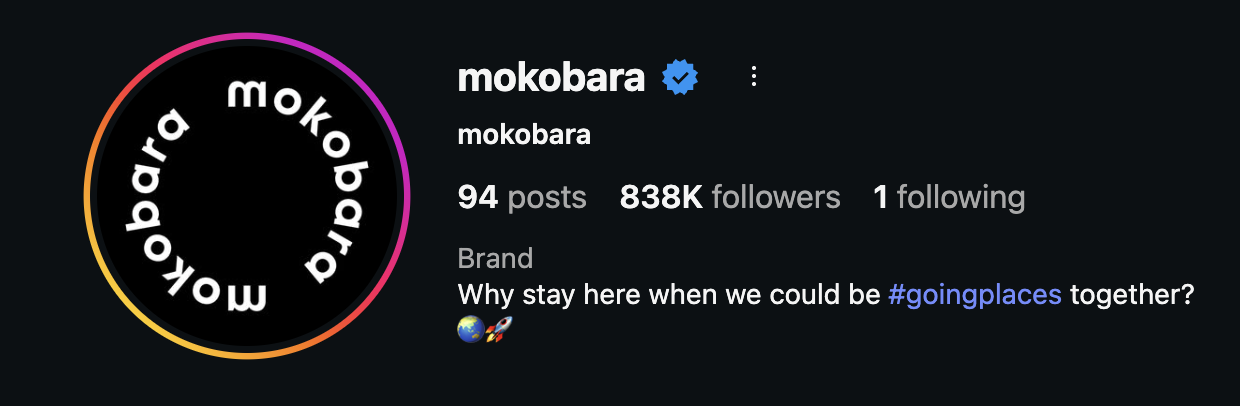
Content Distributor | Mokobara's Instagram handle (@mokobara), plus the customer's own network via reshare. | The brand handle amplifies the best of what customers create. The customer's own network distributes to their friends, who are demographically similar high-intent prospects. |
Channel of Distribution | Instagram (Reels + Stories primary; feed secondary) | 500M+ Indian users. Reels-first algorithm favours short-form travel content. Highest-engagement platform for the Mokobara demographic. Everything else (YouTube Shorts, LinkedIn, WhatsApp Status) is a secondary distribution surface. |
Step 2: Deciding which type of loop needs to be built
There are three broad types of content loops, each with a different mechanic. Mokobara should build UGC-driven brand distribution, not creator-partnership or SEO-content loops. Here's why:
Loop Type | How it works | Fit for Mokobara |
|---|---|---|
UGC-driven brand distribution | Customers create content → brand reposts → new customers are inspired → they buy → they create content | Strong. Product is photogenic, category is Instagram-native, customer base is content-active |
Creator partnership loop | Brand pays creators to make content → creators bring their audience → some buy → cycle depends on paid spend | This is influencer marketing, which Mokobara has already invested in. Not a loop, a channel. |
SEO / editorial content loop | Brand produces long-form content → ranks on Google → traffic converts → some customers share the content → boosts SEO | Strong long term. Luggage is a research-heavy purchase, so Google search matters at the consideration stage. But payback is slow, and requires sustained content operations. |
Step 3: The flow diagram
Step 1: Identify complementary products used by the ICP
Mapping the traveller's journey by who owns each surface, the integration-viable moments are the ones where a single gatekeeper controls a large, travel-confirmed audience.
Journey phase | Surface | Gatekeeper |
|---|---|---|
Trip committed | Visa approval flow | Atlys, VFS Global |
Trip committed | Forex / travel card apps | Niyo, Scapia, BookMyForex |
Trip committed | Student mobility platforms | Leverage Edu, IDP, university forex partners |
Preparation | Airline app add-on purchase | IndiGo, Air India, Akasa |
Airside | Lounges | DreamFolks, Encalm, Plaza Premium |
Arrival | Lost baggage counter | Airline |
At destination | Hotel concierge / in-room | IHCL, Oberoi |
Dormancy | Loyalty catalogues, card milestones | Airlines, HDFC, Amex |
Step 2: Compare potential integrations
Framework (scored 1-5): Audience Size (15%), ICP Alignment (25%), Build Effort (20%, inverse), Exclusivity Moat (20%), Earned Media Value (20%).
Integration | Audience | ICP Fit | Effort | Exclusivity | Media | Score |
|---|---|---|---|---|---|---|
Atlys: visa approval to bag flow | 3 | 5 | 5 | 5 | 4 | 4.40 |
Student mobility platforms: sole luggage partner | 4 | 5 | 4 | 5 | 4 | 4.40 |
Lost baggage compensation: airline-funded voucher | 3 | 5 | 3 | 5 | 5 | 4.30 |
Airline loyalty catalogue: sole luggage redemption | 4 | 4 | 3 | 4 | 3 | 3.60 |
Forex / travel card apps: Niyo, Scapia | 3 | 5 | 4 | 4 | 3 | 3.85 |
Lounge presence: DreamFolks, Encalm | 3 | 5 | 3 | 3 | 4 | 3.65 |
Hotel concierge / in-room | 2 | 5 | 2 | 4 | 3 | 3.25 |
Step 3: The recommendation: three bets, staged
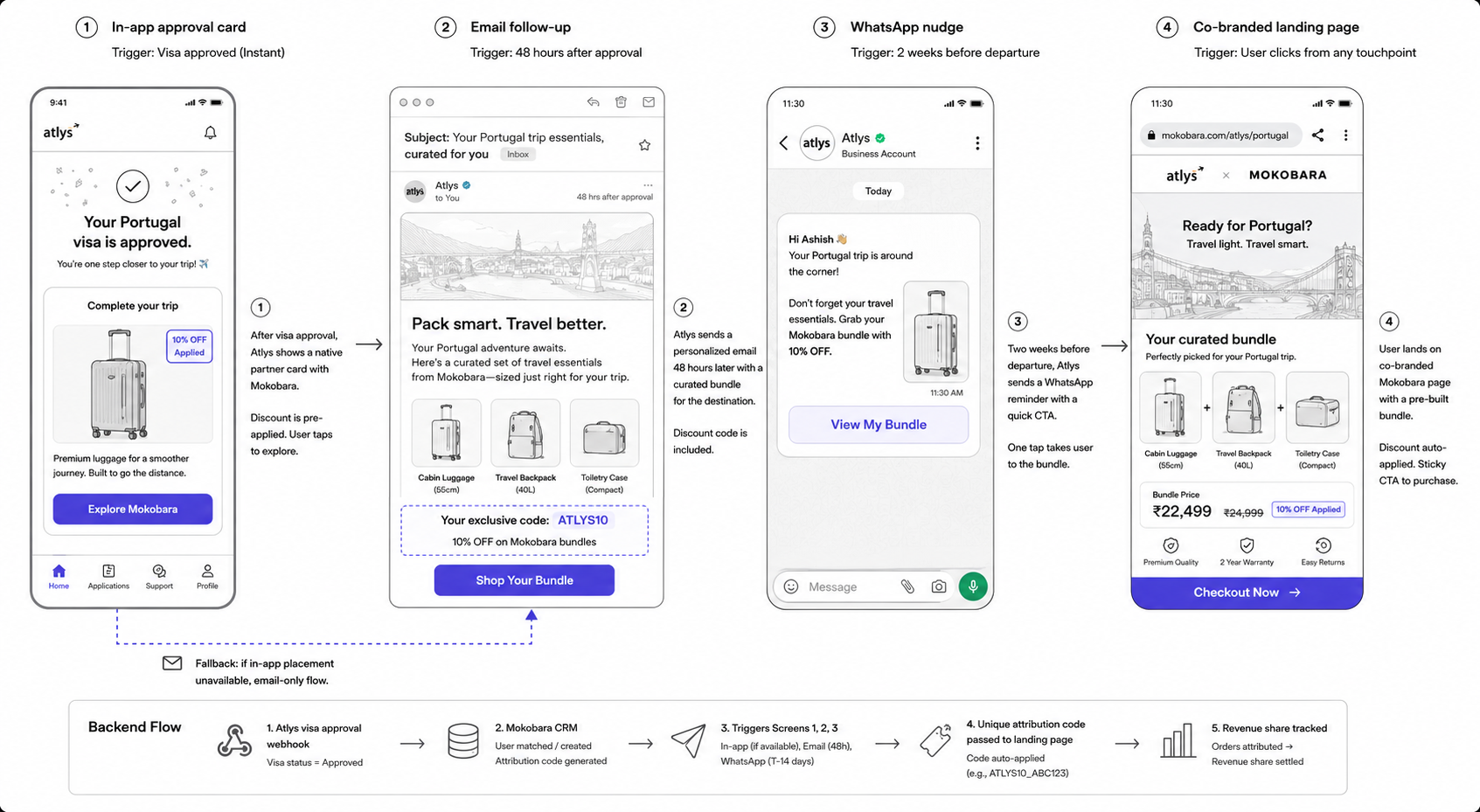
Now: Mokobara × Atlys. Visa approval is the single strongest travel-intent signal in the journey. On approval, Atlys users see a Mokobara bundle in-app and by email, discount pre-applied. Both companies are Bengaluru-based and Peak XV-backed, Atlys is small enough to grant category exclusivity, and the build is 8-10 weeks.
Next: student mobility. Roughly a million Indian students go abroad annually. The purchase is non-negotiable, the parent pays without price sensitivity, the emotional stakes are the highest of any travel purchase, and platforms like Leverage Edu or IDP are small enough that Mokobara can be their sole luggage partner. Same structural logic as Atlys, higher AOV, plus a gifting dynamic.
Horizon: lost baggage compensation. The most original bet available. A passenger whose bag never arrived is standing at an airline desk, distressed, with an immediate and guaranteed need, and the airline already owes them interim expenses. A partnership where that liability is settled with a Mokobara voucher converts an airline cost centre into Mokobara's acquisition channel. Start with IndiGo, where the relationship already exists.
Step 4: Customer journey (Atlys, lead example)
Today: Traveller applies for a visa, gets approved, celebrates, and separately begins researching luggage weeks later with no memory of the trigger.
After: Visa approved, and in the same screen where the good news lands, a Mokobara bundle sized for their destination and trip length appears with a pre-applied discount. One tap to a co-branded PDP. The purchase happens at the peak of trip excitement rather than in the fatigue of pre-departure admin.
Step 5: Wireframe
Step 6: Run pilot tests and measure
Atlys pilot, 90 days: 4,000 visa-approved users, three creative variants. Bars: 8%+ click-through, 2%+ conversion, CAC 40-60% below the Meta baseline.
Post-launch metrics: integration-attributed revenue as a share of new-customer revenue; CAC by integration versus paid baseline; repeat and cross-category purchase rate of integration-acquired customers at six months; whether the mechanic ports cleanly to a second partner, which is the real test of whether Mokobara has built a repeatable capability rather than closed one deal.
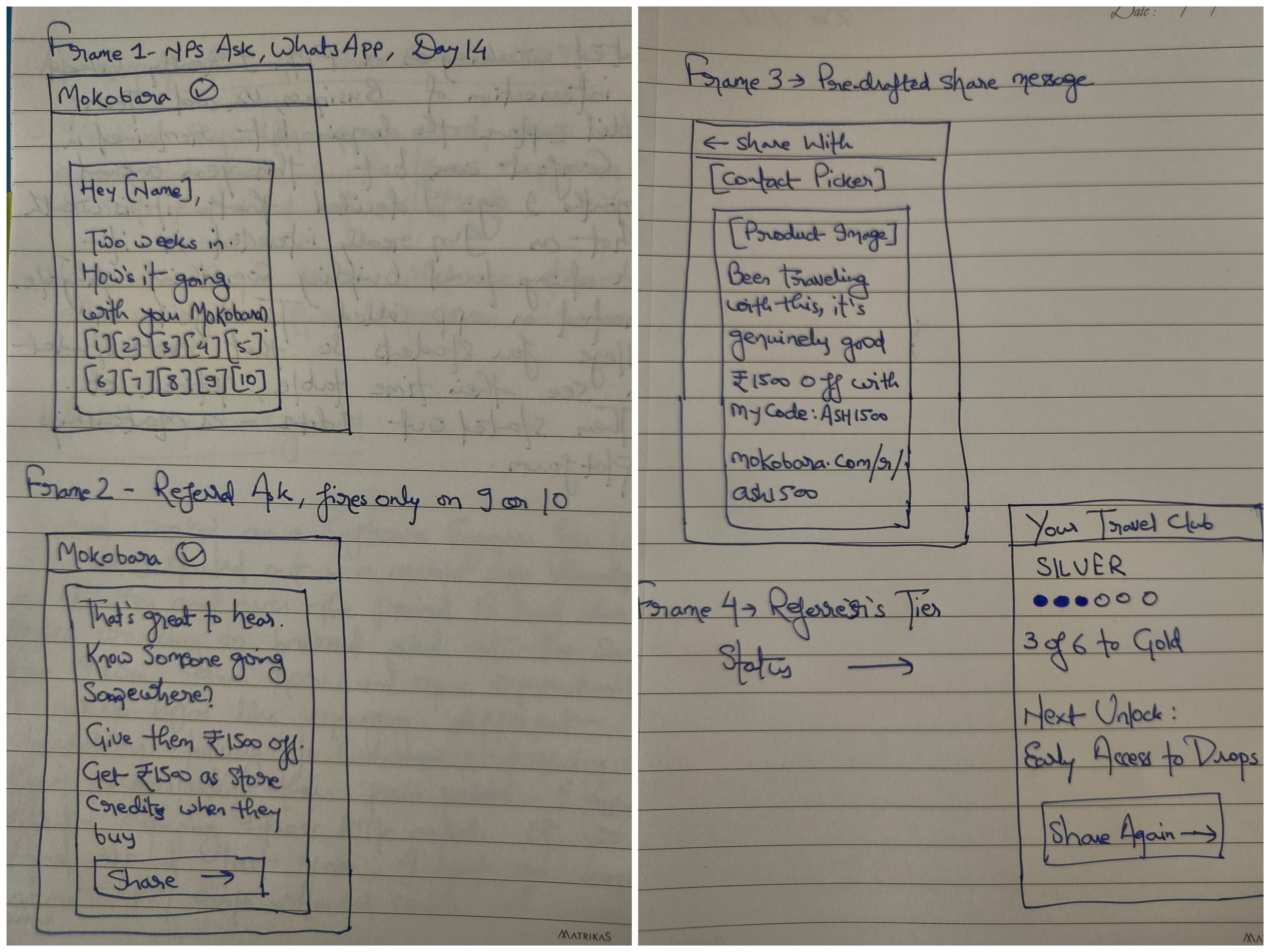
The principle. The referral ask fires only after a verifiable satisfaction signal. A customer who is genuinely happy shares with conviction; one who is indifferent either ignores the ask or passes it along flatly.
The validation gate. On Day 14 after delivery, every customer gets one WhatsApp message: How's it going with your Mokobara? with a one-tap 1-10 scale. Day 14 is long enough that most have travelled with it, short enough that purchase excitement hasn't decayed. WhatsApp because Indian open rates run ~98% versus ~21% on email.
Score | Segment | What fires |
|---|---|---|
9-10 | Promoter | Referral ask within 48 hours |
7-8 | Passive | Care tips and accessory cross-sell, no ask |
0-6 | Detractor | Support outreach, no ask |
Secondary signals that independently unlock the ask: a 4-5 star review, a second purchase, or a voluntary Instagram tag. These catch customers who never respond to the survey.
Channel-agnostic by design. Every retail purchase captures a phone number for GST invoicing and warranty. That number enters the same flow as a website order, which matters when roughly a third of revenue comes through Mokobara's own stores.
The offer. Double-sided: referrer gets ₹1,500 in store credit, friend gets ₹1,500 off their first order. Store credit rather than cash locks in a future purchase in a category with a 5-7 year repurchase cycle, and frames the reward as membership rather than payment.
Tiers, because a flat reward stops motivating after the first referral:
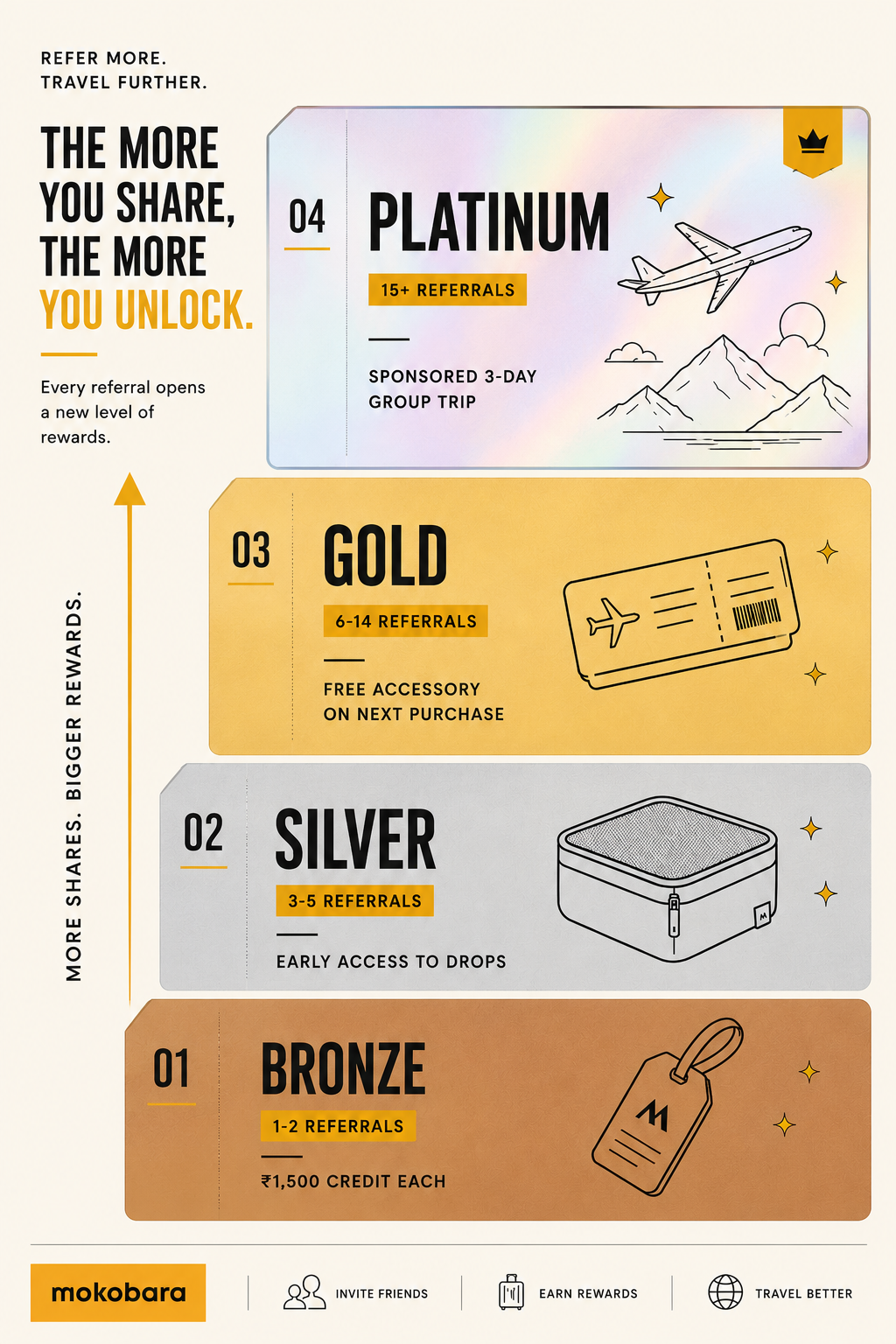
Platinum is deliberately experiential. Someone who has referred these many people is motivated by status and access rather than another ₹1,500.
The mechanic. One tap to a pre-written WhatsApp message with the unique code embedded, editable before sending. Attribution runs on unique codes plus a post-purchase "how did you hear about us" question, so word-of-mouth referrals without the code still get captured.
Metrics. NPS response rate 35%+; promoter rate 60%+; share rate among promoters 25%+; referral conversion 15%+; referral-attributed revenue 8-12% of new customer revenue within six months; blended referral CAC 50%+ below paid baseline.
What would kill it. NPS response below 20% means the survey gate is too heavy, and the program shifts to reviews and second-purchase as primary triggers. Promoters receiving the ask but not sharing means the problem is the offer or the friction, not the gate.
Brand focused courses
Great brands aren't built on clicks. They're built on trust. Craft narratives that resonate, campaigns that stand out, and brands that last.


All courses
Master every lever of growth — from acquisition to retention, data to events. Pick a course, go deep, and apply it to your business right away.





Courses
Built by Leaders From Amazon, CRED, Zepto, Hindustan Unilever, Flipkart, paytm & more



Crack a new job or a promotion with ELEVATE
Designed for mid-senior & leadership roles across growth, product, marketing, strategy & business




Learning Resources
Browse 500+ case studies, articles & resources the learning resources that you won't find on the internet.

Patience—you’re about to be impressed.